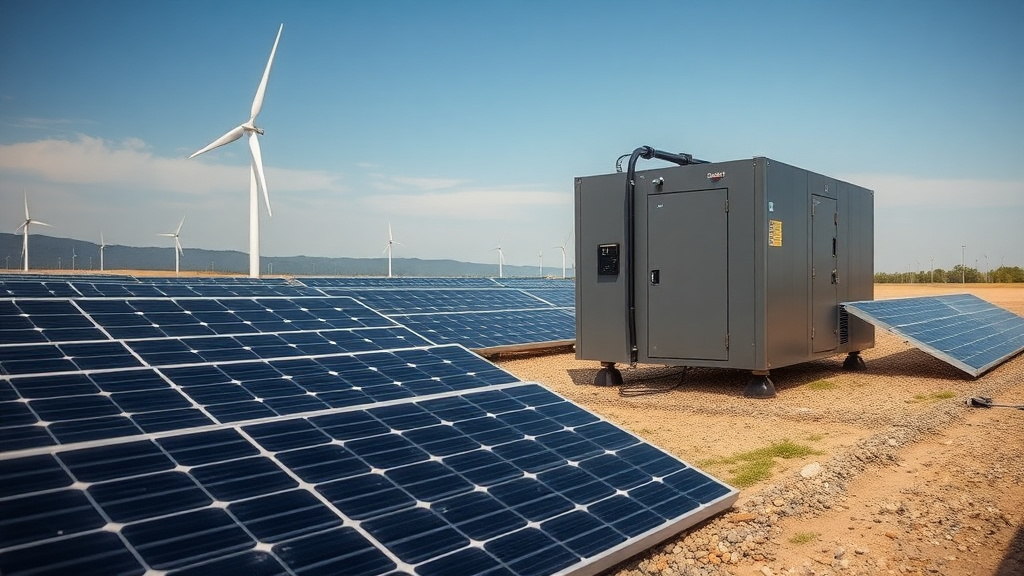

As clean energy options like solar and wind become increasingly prevalent, a critical challenge emerges: storing power when the sun isn’t shining and wind isn’t generating. Recent breakthroughs in battery technology are turning challenges into opportunity, enabling large-scale power storage solutions that promise to transform the power grid. This article explores innovative developments in battery systems, their practical applications, and how they’re paving the way for a more reliable, sustainable energy future that successfully combines renewable generation with consistent power delivery.
Overview
The global energy landscape is undergoing a profound transformation as renewable energy sources continue to expand at unprecedented rates. Solar and wind installations now represent a significant portion of new power generation capacity worldwide, yet their intermittent nature presents a core obstacle to grid stability. Battery storage technology has become the essential technology, enabling utilities to capture excess energy during peak generation periods and release it during demand peaks or low renewable output conditions.
Latest technology advances in lithium-ion battery chemistry, solid-state battery technology, and alternative energy storage systems have dramatically improved performance metrics in multiple areas. Power density has increased substantially, while production costs have declined by over seventy percent in the past decade alone. These advances have rendered grid-scale battery storage economically viable for utility operators, transforming what was once considered too costly into a viable option to conventional fossil fuel power plants.
The consequences of these developments extend well beyond simple energy storage. Grid-scale battery systems now allow higher penetration of renewable power sources while maintaining reliability and power quality standards. They deliver vital grid services encompassing frequency regulation, voltage support, and fast response to changes in demand, significantly altering how modern electrical grids operate and paving the way toward a truly environmentally responsible energy future.
Essential Facts
Grid-scale battery storage systems constitute a fundamental shift in how utilities handle electricity supply and demand. Contemporary lithium-ion batteries, along with new technologies like flow-based batteries and solid-state designs, now offer unprecedented energy density and operational efficiency. These advances allow storage facilities to retain renewable energy for days or even weeks, essentially separating power generation from usage patterns and ensuring grid stability regardless of weather conditions or time of day.
The economic landscape for battery storage has transformed dramatically, with costs dropping more than seventy percent in the past decade. This cost reduction milestone makes large-scale deployment financially viable for utilities and grid operators globally. Improved production methods, streamlined supply chain operations, and growing competition between manufacturers continue driving prices downward, making large-scale battery storage able to compete with traditional fossil fuel power plants for peak load management and backup generation.
Integration obstacles remain controllable thanks to sophisticated software systems and intelligent grid infrastructure. Sophisticated computational methods optimize charge and discharge operations, maximizing lifespan while satisfying immediate grid requirements. Regulatory frameworks are evolving to accommodate these systems, with governments implementing supportive policies including tax incentives, clean energy requirements, and market mechanisms that encourage system installation, accelerating the shift to completely renewable energy grids.
Outlook
The future of grid-scale battery storage appears exceptionally favorable as technological innovations continue to accelerate. Industry analysts predict that battery costs will decrease by another 50-70% throughout the next ten years, creating storage solutions increasingly economical for utilities around the world. At the same time, new technologies like solid-state batteries and flow batteries promise substantially better energy density and durability, substantially boosting the viability of broad-scale rollout across varied locations and climate conditions.
Policy measures and financial incentives are playing a crucial role in shaping this trajectory. Countries worldwide are establishing ambitious clean energy goals and implementing supportive policy structures that promote energy storage adoption. These programs, paired with increasing business pledges to carbon neutrality, are generating substantial demand for next-generation storage technologies. This combination of regulatory backing, market demand, and innovation advances positions battery storage as a cornerstone technology for reaching worldwide emissions reduction targets.
The transition toward clean energy alongside grid-scale battery storage represents a major change in how nations create and utilize electricity. As these solutions advance and costs keep dropping, broad implementation will enable increased deployment of renewables while ensuring grid dependability and strength. This progression delivers a cleaner, more sustainable energy landscape where clean energy becomes the main supplier of international energy supply over the next several decades.
